
Fortius at the 2026 Estoril Political Forum: Rethinking Independence in an Interdependent World
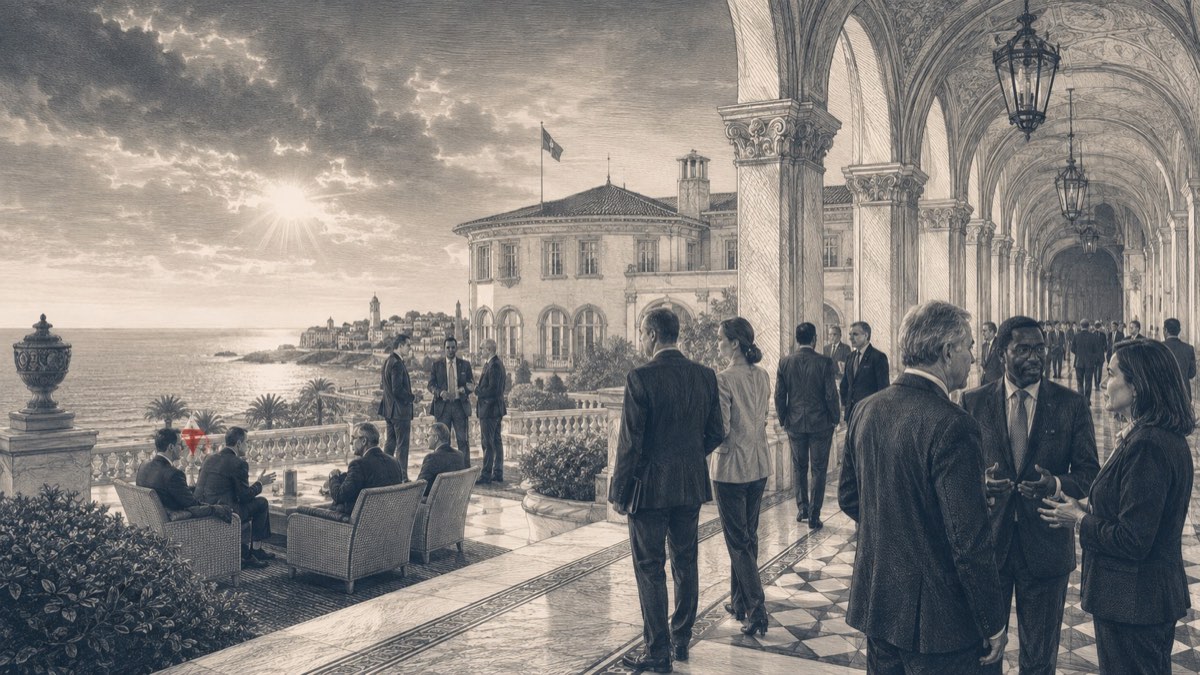
From 1 to 3 June, the Hotel Palácio Estoril hosted the 32nd edition of one of Western Europe’s leading annual liberal-conservative and Christian-democratic gatherings. Fortius Consulting took part as a speaker.
Governance is not merely supervision. It means translating an organization’s principles into genuine social impact. With that conviction, Fortius Consulting, represented by its CEO Juan Ángel Soto, participated in the 32nd Estoril Political Forum in Cascais, Portugal.
The 2026 edition marked the 250th anniversary of the United States Declaration of Independence and was held under the theme “Independence in an Interdependent World.”
A Meeting Place for Ideas and Institutions
The Estoril Political Forum brings together academics, diplomats, public officials, political foundations and think tanks from different countries each year. Its distinctive character lies in combining intellectual rigour with high-level institutional and diplomatic participation.
The opening session included the Rector of the Portuguese Catholic University and the Mayor of Cascais. Speakers also included Mark Plattner, co-founder of the Journal of Democracy; António Feijó, President of the Calouste Gulbenkian Foundation; Carlo Masala, Professor at the Bundeswehr University Munich; and José Manuel Durão Barroso, former President of the European Commission.
Partner organizations included the Konrad-Adenauer-Stiftung, Forum 2000, Europaeum and the International Coalition for Democratic Renewal.
Catholic Social Thought and Globalization
Juan Ángel Soto joined Leonor Durão Barroso and Philip Booth in a panel moderated by André Azevedo Alves. Their discussion focused on subsidiarity and solidarity as principles for reconciling political independence with the realities of an interdependent world.
Catholic Social Thought offers neither another ideology nor a technocratic recipe, but a moral grammar for navigating the tensions between sovereignty and cooperation, identity and universality, economic efficiency and community resilience.
Some Conclusions
Atlanticism is being transformed rather than simply disappearing. Its future will depend on institutions capable of sustaining relationships across political cycles and on the people and organizations that give those institutions substance. Prudence, in this context, is not indecision: it is the discipline of judging circumstances without abandoning principles.
An Opportunity for the Hispanic World
The conversations in Estoril also reinforced the need for a comparable forum of Hispanic thought in Madrid: Atlantic in outlook, connected to Latin America and capable of bringing intellectual reflection into sustained institutional dialogue.
Juan Ángel Soto